Gen Alpha Game Creators: 19% of Kids Want to Make Games (Here's How)
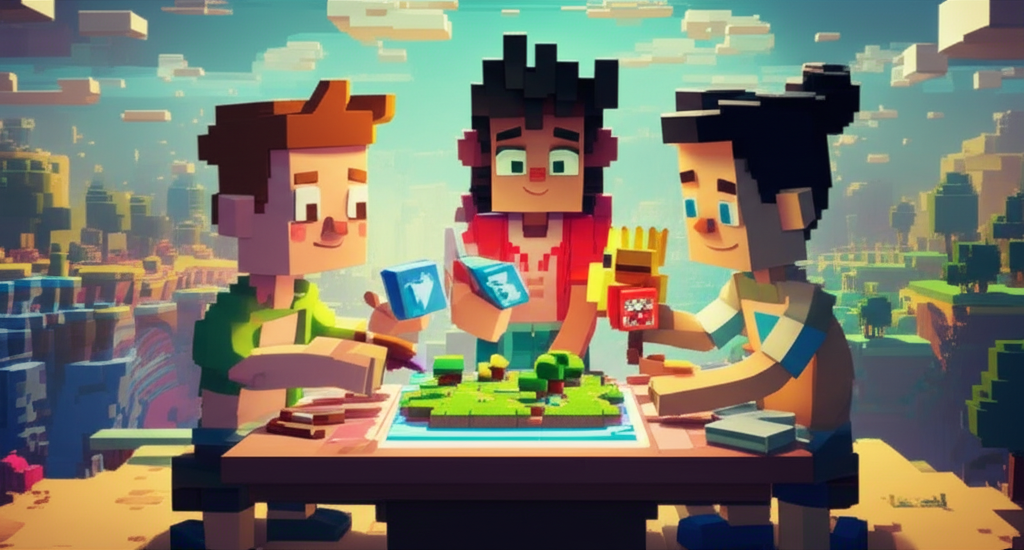
According to a recent Fast Company survey, 19% of Gen Alpha kids want to be game developers. That's nearly one in five children dreaming of creating their own games. But traditional game development requires years of learning to code. Here's the new path.
The Numbers Don't Lie
Gen Alpha—kids born after 2010—are growing up differently than any generation before. They're not just playing games; they're imagining themselves as the creators. Consider these statistics:
- 19% want to be game developers — more than doctors, lawyers, or teachers
- 27% of Gen Z feel like "main characters" — they want to create their own narratives
- 140 million kids learned basic coding through Scratch
- Yet 95%+ drop off when transitioning to "real" programming
"It's not enough for our children to be mere consumers of content; we want them to be creators."— Lycée Français Educational Blog
The Problem: Traditional Tools Are Built for Adults
When a 12-year-old says "I want to make my own Minecraft," what are their options?
Option 1: Scratch (Ages 8-12)
Scratch is brilliant for teaching basic programming concepts. 140 million users can't be wrong. But there's a ceiling:
"It's not meant to make REAL games, just simple games for kids." — Scratch community user
Kids who've mastered Scratch often feel stuck. They've outgrown the platform, but the next step (Unity, Unreal) requires years of study.
Option 2: Roblox Studio (Ages 10-16)
Roblox lets kids build experiences, but custom mechanics require Lua scripting. Many kids copy-paste code they don't understand, leading to frustration when things break.
Option 3: Unity/Unreal (Ages 14+)
Professional tools with professional complexity. Most kids give up within a week—not because they lack talent, but because the learning curve is brutal.
The "Missing Middle" Problem
There's a massive gap between "kid tools" like Scratch and "adult tools" like Unity. Millions of young creators are stranded in this gap—full of ideas, but without tools to bring them to life.
This is what we call the missing middle step. Kids graduate from Scratch ready to create real games, but there's nowhere for them to go.
The New Solution: Vibe Coding for Games
Vibe coding—describing what you want in plain language and letting AI build it—is changing everything. Instead of learning C# or Lua, kids can describe their game:
"A survival world where gravity reverses every 5 minutes. You can build bases on the ground or the ceiling. The goal is to collect 10 floating crystals."
And it exists. Playable. Shareable. Theirs.
Why This Works for Kids
- Natural language is natural. Kids already describe games to each other—now that description becomes the game.
- Instant feedback. See results in minutes, not months.
- Iteration over perfection. "Make the dragons faster" is easier than debugging physics code.
- No syntax errors. No frustrating "missing semicolon" failures.
Real Examples: What Kids Are Building
Young creators using vibe coding tools are building:
- Dragon-riding survival games — taming, flying, base-building
- Mystery mansion adventures — clues, puzzles, detective gameplay
- Custom battle royales — unique mechanics their friends actually play
- Educational worlds — history explorations, science simulations
What Parents Need to Know
93% of parents want their kids learning computer science. Game creation is one of the most engaging ways for kids to learn:
- Problem-solving — every game is a series of "how do I make this work?" puzzles
- Creative expression — building worlds develops imagination and design skills
- Persistence — shipping a game teaches finishing what you start
- Career relevance — the $200B+ game industry needs creators
Read our full parent's guide →
Get Your Kid Started
Vibeforge is designed for this moment: helping the next generation of game creators turn their ideas into reality without coding barriers.
Join the Vibeforge waitlist and be among the first families to access the future of game creation.
Ready to build a server or world?
Join the waitlist for early access. Pick a workload, start from a template, and iterate by chatting.